


Remote care has matured.
For many healthcare organizations, the question is no longer whether to offer remote patient monitoring (RPM). Instead, it’s how to run RPM programs effectively–without creating more work for physicians and staff.
That shift is changing how practices evaluate remote care programs.
Healthcare leaders are moving beyond device catalogs and dashboards and asking a more practical question:
Who owns the work?
Because successful remote care programs aren’t built on technology alone. They’re built on processes that ensure the right action happens at the right time for every patient.
What Is a Task-Based Remote Care Model?
A task-based care model organizes remote care around actions rather than technology.
Traditional remote care programs typically do things the other way around. They often focus on devices, dashboards, and data collection. While those tools are important, they don’t guarantee that patients receive support or that practices gain actual operational efficiency.
A task-based approach starts with a different question: “What needs to happen next?”
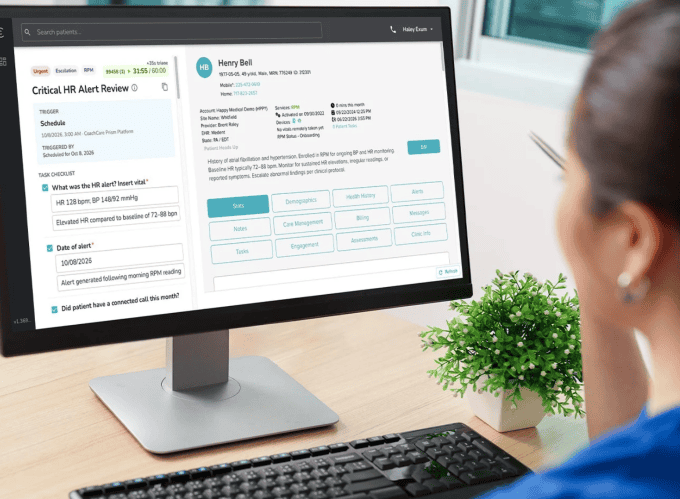
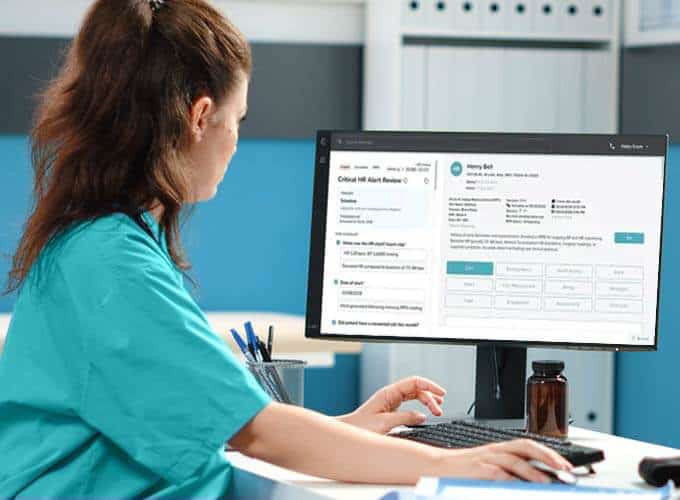
Instead of simply generating information, task-based remote care creates structured workflows that ensure patients, care teams, and providers take the appropriate next steps.
In action, that might look like:
- Contacting a patient after an out-of-threshold reading
- Reinforcing a treatment plan
- Scheduling follow-up care
- Conducting eligibility verification
- Escalating a concern to a provider
- Preparing documentation for reimbursement
Every task has an owner, and every action has a purpose.
Why the Difference Matters
As we’ve discussed throughout our series on remote care as an extension of your practice, it’s this operational ownership piece that’s often the missing ingredient.
Technology is easy enough to access, but it can surface new problems that place additional strain on staff.
Most other remote care management solutions offer template-based platforms, rather than task-based options. These platforms have pre-built care paths that lack the customization that a task-based alternative offers from the outset of engagement.
Likewise, templated care plans for two or more coexisting conditions often lack the flexibility to adjust to individual patient needs as their health status changes. The convenience they offer to start quickly turns into additional administrative burdens over time.
Task-based care, on the other hand, can evolve with the patient and their conditions. Under CoachCare’s model, a dedicated care coordinator calls patients monthly to check on how they are doing and what they are doing for their health. The care coordinator can then assign tasks to deliver an appropriate next step based on the interaction.
Care plans built in a tasking environment mirror the quality of care that providers deliver in-office. When applied to remote care programs, a task-based approach ensures a continuation of attentive care, with more frequent touchpoints for both patients and providers.
The goal is to ensure that remote care programs and remote patient monitoring function as a structured operational process rather than a collection of disconnected activities.
3 Key Benefits of a Task-Based Remote Care Model
A task-based model offers three key benefits in care delivery, including improvements in:
- Patient engagement and accountability
- Physician efficiency and quality of care
- Practice efficiency and compliance management
Without a task-based approach, practices may find themselves struggling to achieve one or more potential benefits of RPM. Below, we examine how task-based remote care helps practices manage each.
1. Improved Patient Engagement & Accountability
Patient engagement in remote care programs doesn’t happen because a device was shipped or received. It happens because someone is consistently helping patients stay connected to and informed about their care plan.
Task-based care creates clear next steps for patients and care teams alike:
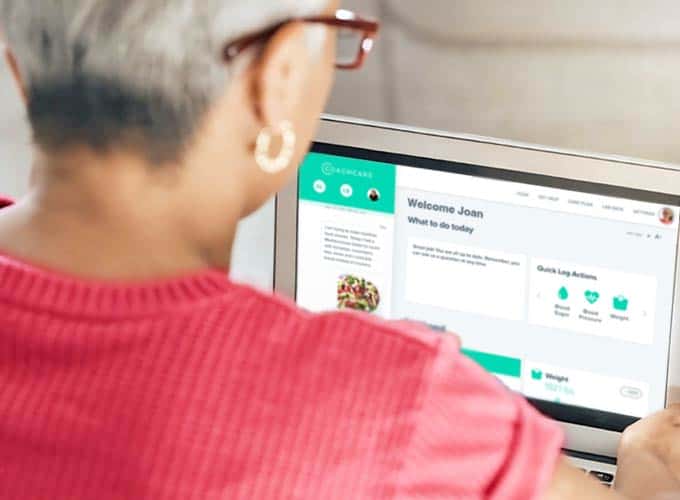
- Patients receive guidance and instructions related to their health status, like reminders to take medication or measure their vitals.
- Care management teams ensure that important follow-up activities get escalated and don’t fall through the cracks.
- Providers gain greater visibility into treatment adherence and patient needs, allowing them to make more informed and personalized decisions during in-person appointments.
The overall result is a stronger feedback loop between the patient and their care team.
Patients know what’s expected of them, and providers get the insights they need to deliver top-quality care. Accountability becomes part of the process rather than an afterthought.
2. Enhanced Physician Efficiency & Care Quality
One of the biggest misconceptions about remote care is that it creates more work for physicians. In reality, the goal should be the opposite.
Task-based remote care platforms help ensure that routine monitoring, patient outreach, documentation, and follow-up activities are handled by the appropriate team members before issues ever reach the provider.
Unlike limiting and rigid templates, a task-based approach allows providers to bring care plans to life. It also delegates responsibility and accountability over the care process to different stakeholders, including the patient:
- Patients can report their progress and health measures using RPM devices and platforms
- Care coordinators receive tasks to track or monitor data
- Providers are assigned tasks to provide a clinical assessment or screening
- Care teams use tasking to send follow-up notices, reminders, and notifications to patients
With better communication and collaboration between patients and their care teams, patients can get better support in real-time without adding to provider workload.
That means physicians are free to focus on the work only they can do: diagnosing patients, developing treatment plans, and making clinical decisions.
Meanwhile, providers still receive the information they need to make informed decisions – because care activities, patient interactions, and escalation notes are documented and available inside the EHR.
3. Increased Practice Efficiency & Compliance
Remote care programs generate a significant amount of operational work. Task-based platforms, though, can improve practice efficiency by automating certain tasks and prioritizing patient needs across care team roles.
They achieve this by introducing a structured process for managing operational work. Task-based care platforms ensure activities like patient interactions and escalation are organized, documented, and tracked throughout the care journey.
With CoachCare’s remote care platform, providers can collect more accurate information and data without experiencing alert fatigue, thanks to the platform’s AI-assisted pathways and practice escalation tools.
- Front-line patient escalation tasks are managed with care team and nursing oversight. These cases are then communicated back to the practice by creating a task directly within the EHR.
- Follow-up escalation tasks ensure that proper attention is given to patients, and the next indicated step is planned.
- These care activities are also time-stamped and recorded, so that all tasks completed align with Medicare billing requirements.
The task-based model improves operational efficiency while also supporting compliance, reimbursement, and audit readiness.
Instead of scrambling to gather information after the fact, practices have a clear record of what occurred, when it occurred, and how it contributed to patient care.
CoachCare’s Difference: On-Site Staffing to Support Remote Care
Many remote care vendors provide technology. Few provide operational ownership.
This is where CoachCare takes a different approach. Rather than asking practices to absorb the workload required to run an efficient remote care program, CoachCare also provides operational support with a team of US-based W-2 employees.
These team members work five days a week to help your practice manage your remote care program and ensure it serves as an extension of your practice’s operations. The care management team takes ownership of tasks like:
- Identifying eligible patients
- Conducting insurance pre-qualifications
- Facilitating patient enrollment and engagement
- Supporting onboarding
- Coordinating ongoing program participation
This close collaboration with physicians and mid-level providers allows practices to focus on patient care. Meanwhile, CoachCare helps manage the operational work behind the scenes.
The support extends beyond enrollment, too. When practices face denials or audits, CoachCare can package the relevant patient data, documentation, and program activity needed to support the review process.
CoachCare’s team also helps ensure billing documentation aligns with program requirements, reducing administrative burden and improving program sustainability.
All of this results in a remote care model that doesn’t simply enable care between visits. It helps run it.
What to Look For in a Remote Care Platform
As remote care programs become more common, healthcare leaders looking to invest in them should look beyond device catalogs and software features.
The most important question to consider isn’t what the technology can do. It’s what the organization behind it will do.
With that in mind, when evaluating a remote care partner, practices should zoom in deep to look for:
- EHR integration that embeds remote care into existing workflows
- Operational support that reduces staff workload
- Structured escalation processes
- Documentation that supports compliance and reimbursement
- Flexible workflows that adapt to patient needs
- Care teams that actively engage patients in the care process
- A clear plan for patient identification, enrollment, and onboarding
Most importantly, practices should look for a partner that takes ownership of the execution of the remote care program. Successful programs are built on processes, not just platforms.
When creating our task-based remote care platform, CoachCare applied more than a decade of experience working with practices and physicians to create efficient, quality-enhancing processes. Key capabilities unique to our platform include:
- Time-tracked tasking, which accurately captures all work performed in the course of care delivery. That includes everything from ordering to reviews of health history, call attempts made, follow-up activities, vitals monitoring, and more.
- Full EHR integration – no third-party logins or extra clicks required.
- Flexibility to assign role-based tasks across the workforce as needed, adjusting as required at the practice, provider, and patient level
- Triggered alerts that are sent only when clinically relevant, such as when captured vitals fall outside of a critical threshold
To maximize program efficiency and results, many practices choose not only to use our task-based platform but also to partner with us for our RPM and chronic care management (CCM) clinical services. When they do so, our clinical team provides care coordination on behalf of the practice.
The Bottom Line
Task-based care models are changing how remote care gets delivered.
They shift the focus away from devices and dashboards and toward what matters most: execution, accountability, and operational ownership.
That’s why they’re replacing traditional RPM programs.
Better remote care isn’t defined by how much data a platform collects. It’s defined by whether the right work gets done for the patient at the right time.
For practices looking to scale remote care without adding burden to internal teams, that difference matters.
Want to see how CoachCare’s task-based program, care management services, and on-site operational support can help you scale remote care without adding staff? Check out the rest of the blog series for more information, or schedule a demo and see how CoachCare can help your practice extend care beyond the visit.