

As Medicare policy evolves, some practices are asking whether they should bring their remote patient monitoring programs in-house. On paper, it looks simple: hire a few nurses and medical assistants, license software, and keep the revenue.
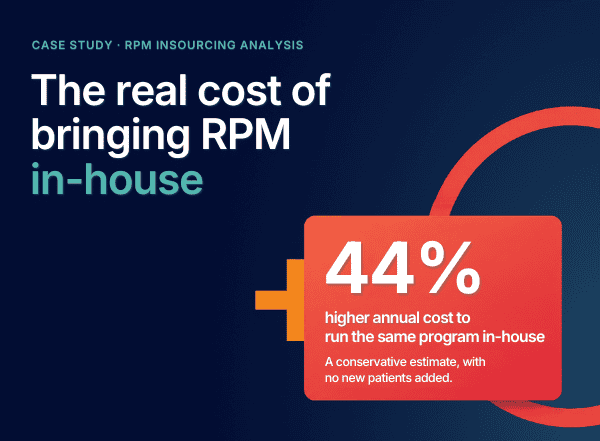
We worked through the numbers with one of our clients, an independent cardiology practice with more than 500 patients enrolled in RPM. Running the same program in-house would cost the practice an estimated 44% more each year, without adding a single patient. And that's the conservative version: it leaves out outside regulatory counsel, rising technology costs and growth.
The full case study breaks down every line item, from care navigators and nurse oversight to software, devices and the costs practices often overlook, like covering turnover and keeping protocols current as CMS rules change. It also looks at what's at stake for patients when a small in-house team has a vacancy or a sick day.
Frequently Asked Questions
How much does it cost to run a remote patient monitoring program in-house?
For one independent cardiology practice with more than 500 patients enrolled in RPM, running the same program in-house would cost an estimated 44% more each year than its current partnered program. That estimate assumes no growth and leaves out outside regulatory counsel and rising technology costs, so the real gap is likely larger.
What staff does an in-house RPM program need?
To match a dedicated care team, a practice would need care navigators (typically MAs or LPNs), RN oversight for clinical supervision and escalation, technical support for devices and patients, and HR for hiring and onboarding. Physicians also need time for protocols and quality review. In the case study, clinical staff and program leadership made up 72% of the in-house cost.
Do you still need RPM software if you bring the program in-house?
Yes. Practices still need third-party RPM software to collect device data and track the time required for billing, along with devices, replacements and data fees. In the case study, technology and devices accounted for nearly a quarter of in-house costs.
How does a small in-house RPM team affect patient care?
Monitoring only works when someone reliably reviews readings and acts on them. With a small team, one vacancy, vacation or sick day can leave readings unreviewed and patients without follow-up. Turnover also breaks the relationships patients build with the staff who call them each month.
Does partnering with an RPM provider mean giving up control of your program?
No. With a partner like CoachCare, the practice keeps clinical oversight and the patient relationship. CoachCare handles staffing, coverage, devices, protocols and keeping up with Medicare’s rules, and spreads those fixed costs across many practices..